




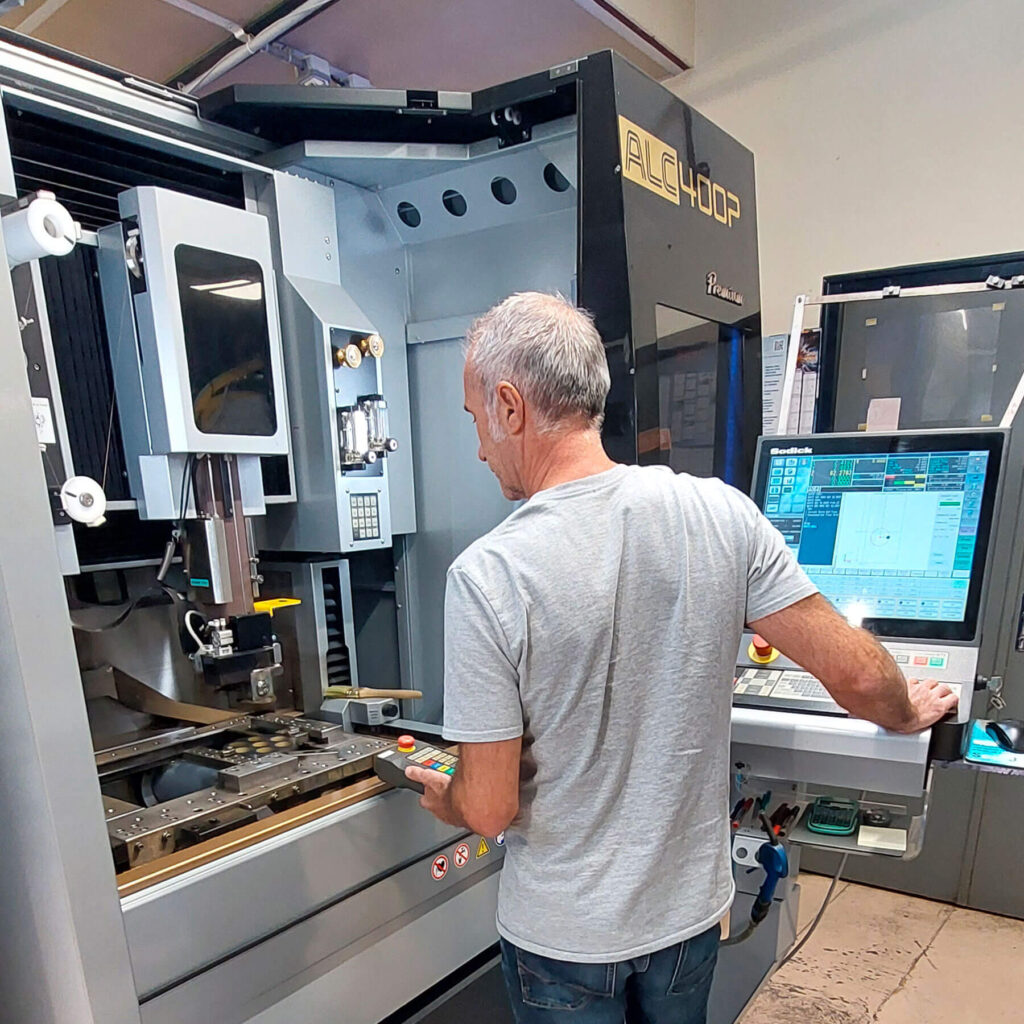
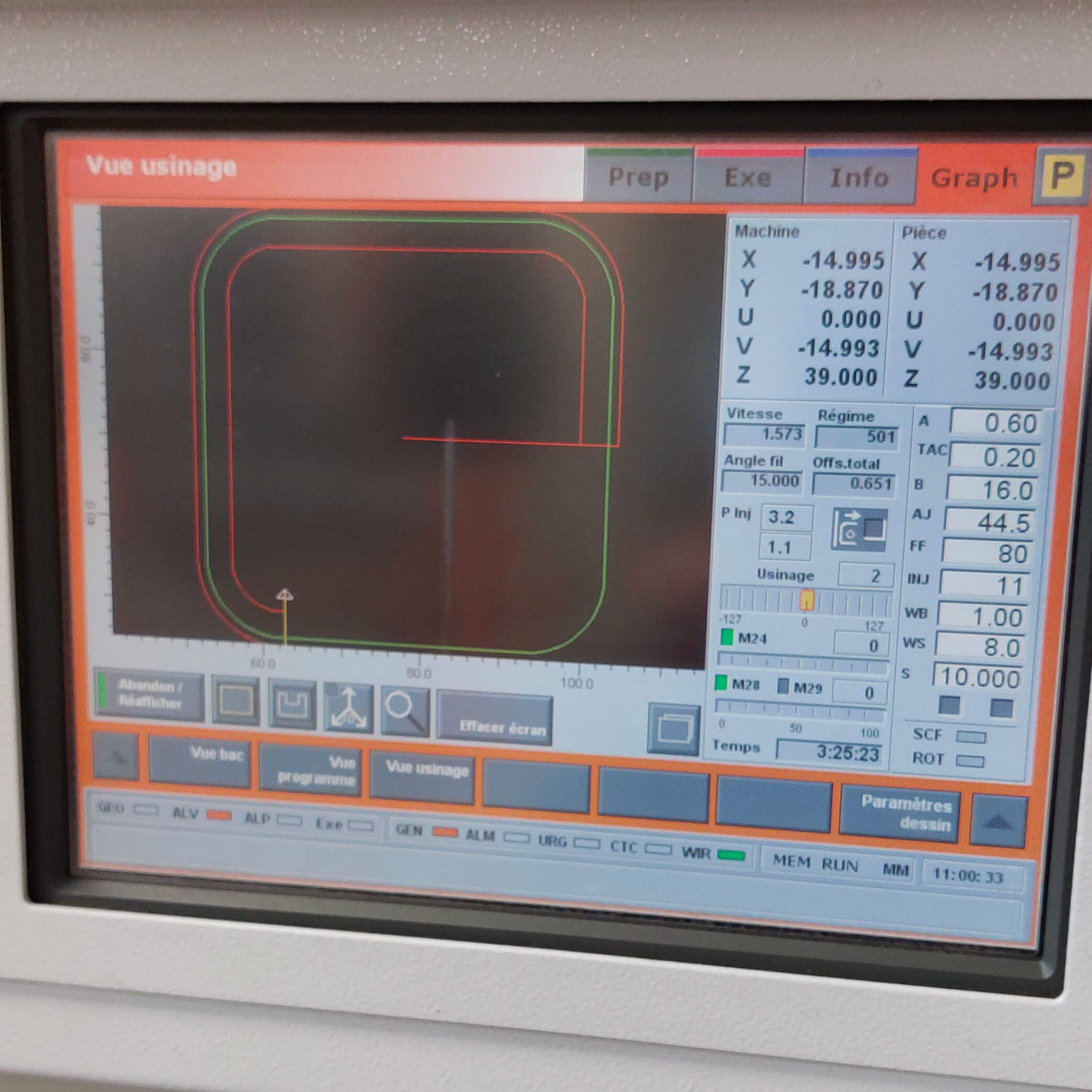
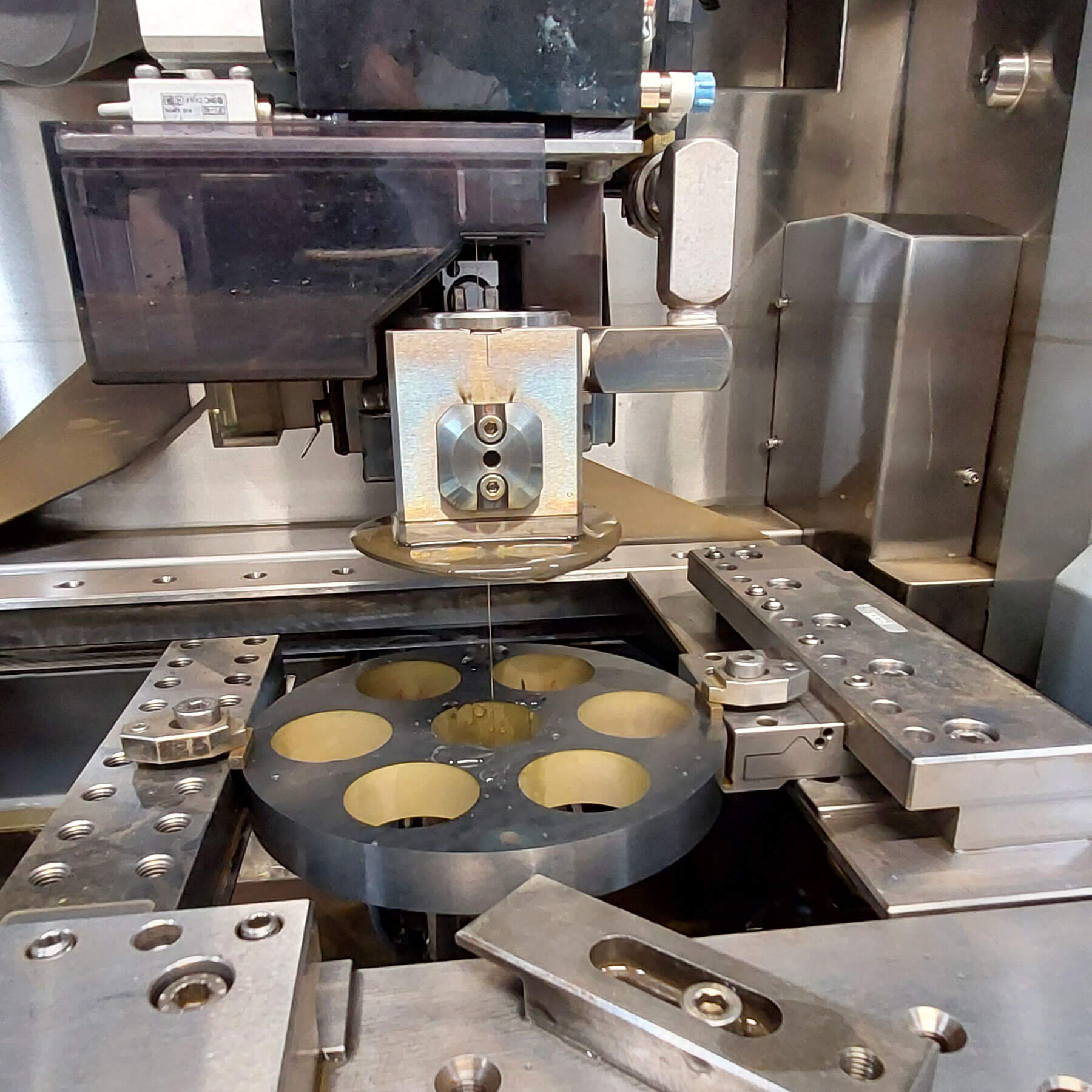
Wire and spark electrical discharge machining (EDM) is one of the high-precision processes we at MicroMécanique specialise in. This technology involves removing material via a series of electrical sparks travelling between a conductive wire and the workpiece, which are both immersed in an insulating fluid.
This process does not involve any mechanical contact, enabling complex and delicate parts to be machined with micron-level precision while avoiding clamping and any risk of distortion. It is an ideal solution for machining hard metals, carbides and hardened steels.
Direct industrial applications
Wire electrical discharge machining is used in many sectors requiring tight tolerances and complex shapes:
- Aeronautics and space: miniature components, precision fixtures and assemblies.
- Defence and nuclear power: impressions and tooling made from hardened steels and carbides.
- Medical devices and connectors: machining fragile micromechanical parts or parts impossible to produce by milling.
- Luxury goods and watchmaking: precision cutting, complex contours, machining miniaturised patterns.
- Engineering industries: high-precision dies, cutting tools and fixtures.
Our EDM machines
Our workshop is equipped with wire and spark EDM machines capable of processing both individual parts and small production runs:
- Wire EDM
- CHARMILLES CUT 200 – XYZ axes: 350 x 220 x 220 mm
- CHARMILLES 240 CC – XYZ axes: 350 x 220 x 220 mm
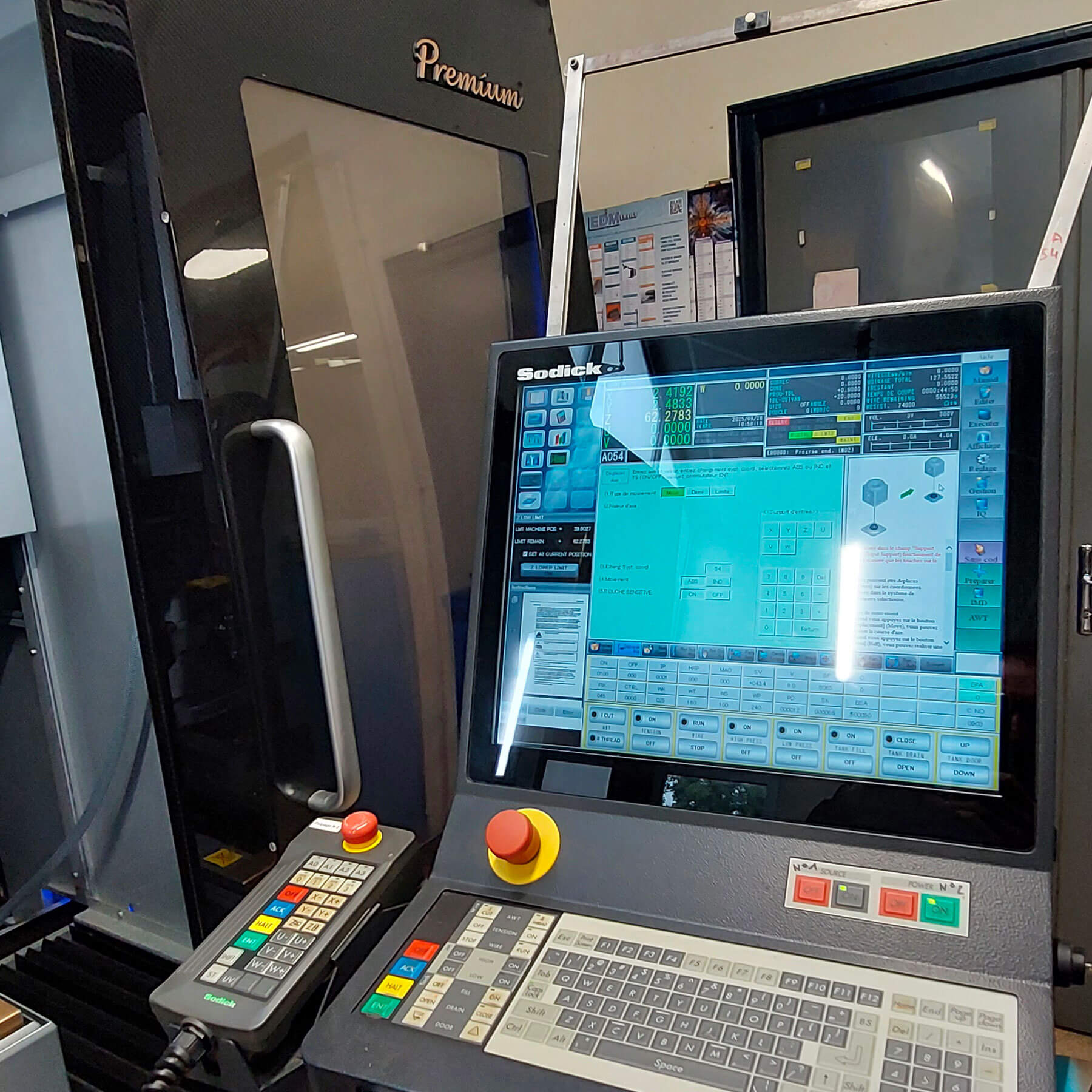
- SODICK ALC400P iGE – XYZ axes: 400 x 300 x 250 mm
- Spark EDM
- CHARMILLES FORM 20 – XYZ axes: 350 x 250 x 250 mm
- INGERSOLL HS300E – XYZ axes: 300 x 200 x 285 mm
- High-speed drilling
- RIVER 35HP (Ø 0.3 to 3 mm)
This equipment enables complex machining with tolerances of around ±0.001 mm and surface finishes that can reach Ra 0.015.
Capabilities and performance on technical and hard materials
Wire and spark EDM is particularly suitable for machining the following materials:
- Tungsten carbide: for wear-resistant tooling parts.
- Hardened steels: for impressions and cavities without modifying the mechanical properties.
- Titanium and special alloys: for complex cutting on lightweight and tough parts.
- Stainless steel, copper, brass and aluminium: for delicate machining of technical or decorative parts.
- Conductive ceramics: to cut fragile materials with micron-level precision.
With this process, MicroMécanique produces shapes unattainable by conventional machining, with perfect repeatability and strict compliance with customer specifications.